
Business system
Case study: Trafik ExpresszTrafik Expressz
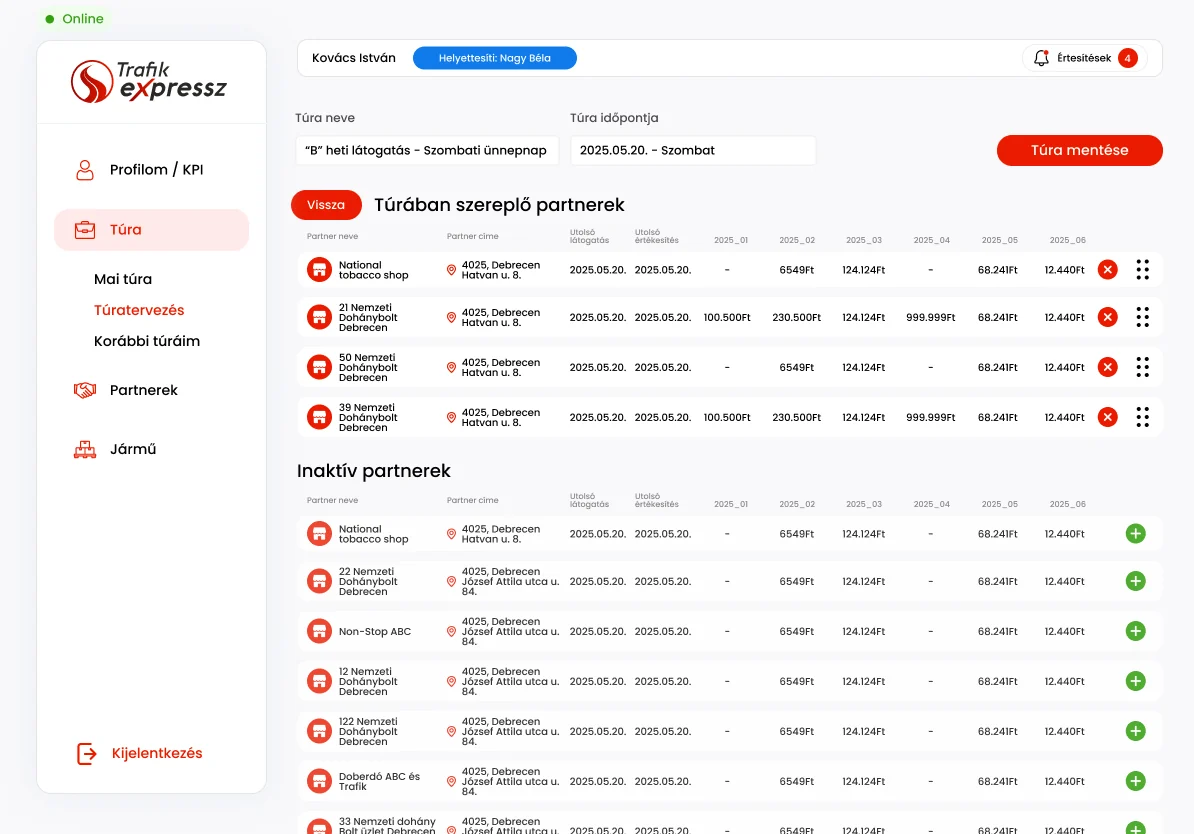
A sales support system on SAP Business One, running on tablets and phones for a nationwide field sales team.
IT project specification · Discovery phase
Got an idea or a process that has stalled, but no precise description of it yet? Before development starts, we run a separate discovery phase: together with one of our business analysts we gather every requirement and write a software requirements specification, with written requirements, visual designs and a system design. It shows you what we will build, how long it will take and in what order.
Complex SAP integration, planned up front
When do you need it?
Most software projects don't go wrong in the coding. They go wrong because the client and the developer read the same sentence differently. Without a precise specification every quote is a guess, and what was left out only surfaces halfway through. An IT project specification removes that uncertainty before development begins.
With us, specification is a phase of its own, separate from development. Through guided questions and joint meetings we map every function and behaviour of the system, from a business and an IT angle at the same time. At the end you have the requirements specification, the visual design and a development roadmap, so any quote for the software development rests on solid ground.
What you get
A specification ends in a visual document and a written one that together cover every requirement of the project. Where needed we work out the technical details too, so on the first day of development everyone is looking at the same plan.
We pin down the goals, the users and the processes together, so the system solves a business problem rather than ticking off a feature list.
Every functional and non-functional requirement written down: what the system does, for whom, under which rules, and what standards it has to meet.
Screen designs and user journeys that show how the interface will work before development starts, thought through from a UX/UI perspective.
Where needed, we work out the architecture, the data and the integrations, such as connecting an existing ERP or CRM system.
Prioritised features broken down into sprints. Once the exact requirements are known, the project is far easier to estimate and deadlines are easier to keep.
An expert team explores the options: what can be built, what a sensible first version looks like, and what can wait for a later round.
Our work
A sales system built on SAP Business One, a development plan we put together from the client's existing materials, and a language learning platform we have been building for 10+ years across five major versions.
A sales support system on SAP Business One, running on tablets and phones for a nationwide field sales team.

A subscription-based learning platform with hundreds of video lessons and masterclasses, on any device.
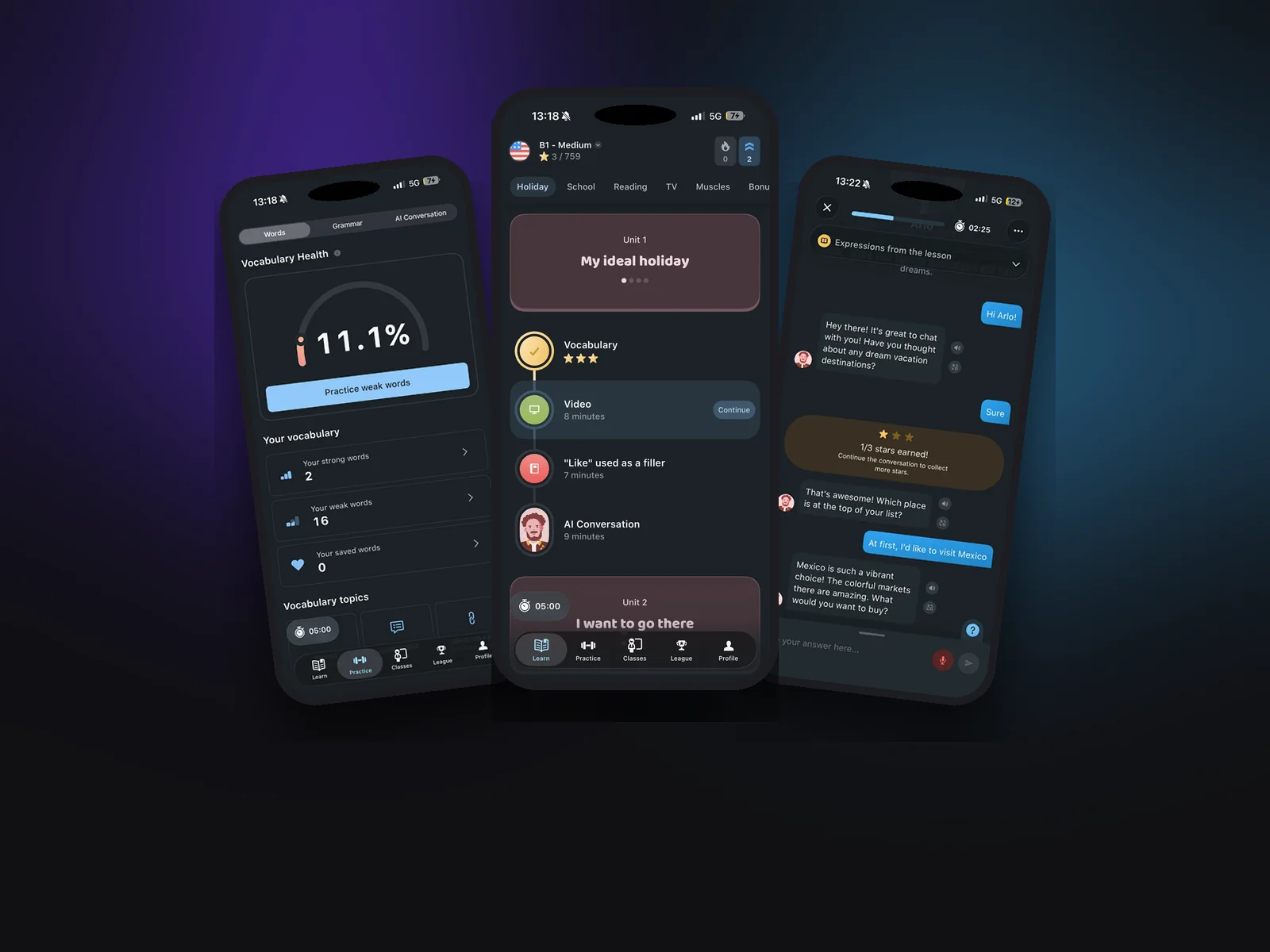

Playful language learning with AI conversations for 5 million learners. The official language learning module of Hungarian public education.
How we work
One of our business analysts leads the specification, and our developers take part too, so whatever goes on paper can actually be built. We tailor the process to your project: the team's make-up and capacity follow what you need.
We look not only at what can be built but at what is worth building: what adds value in the first version, and what can wait.
A business analyst gathers the requirements and our developers work out the technical questions, in the same process.
You get a document anyone in your company can follow, not just a developer. Full transparency, no hidden detail.
You don't need to know what to write down. We ask, you talk about your business, and the plan comes together from that.
Our process
Specification is the second step: after the first consultation and before development. Then we prioritise the features and usually deliver the system piece by piece in 2–3 week sprints.
We get to know your business goal, your current processes and the technical constraints before we talk about any solution.
We put together a concrete, documented plan: what we build, with which technology, on what timeline.
We work in short cycles with regular feedback points, so anything that needs correcting shows up early.
Thorough testing and a controlled rollout make sure live use goes smoothly.
Delivery is not the end, it is just the beginning. We maintain, extend and scale the system through your next business stage too.
Technologies
During specification we also recommend the technology the system should be built with, matched to the size of the project, your existing systems and your budget, not to fashion.
Debrecen and Europe
A specification involves a lot of conversation, so we are happy to meet in person: our office is on Simonffy utca in Debrecen. Our clients come from all over Hungary, though, and requirements workshops work just as well online.
We work in English too, so we can write the documentation with international teams or a parent company abroad.
FAQ
If your question isn't here, bring it to our first conversation.
It is the planning phase before development, in which we describe every function and behaviour of the system. The result is a software requirements specification: a written document with the functional and non-functional requirements, a visual design and, where needed, a system design with the technical details.
Typically 1–1.5 months, but it depends heavily on the size of the project: on how much time and effort it takes to uncover every requirement together with our business analyst.
We need you to be available during the specification, because we gather the requirements in joint meetings. If you already have materials, we work from those too: for gotomarketing.hu, for example, we put the development plan together from their existing materials.
It depends on the size and complexity of the project, so we don't quote off the cuff. We start with a free consultation to talk through what you need, and then give you a proposal for the specification.
Yes, that is one of the main points of a specification. Once the exact requirements are known, we break the project into sprints and follow a roadmap, so the cost and schedule of development are far easier to estimate than from a few lines of description.
Yes, that is a typical starting point. The specification shows what can be built, what belongs in the first version and what can wait, before you put serious money into development.
We prioritise the features and usually develop in 2–3 week sprints. The first sprint or two is mostly groundwork; after that we typically show you progress in a demo every one or two sprints. Development is followed by testing and a beta period, then launch and long-term support.
Related services
Business software, CRM and ERP integration, AI automation.
Take a lookCustomer portals, SaaS, subscription platforms and admin systems.
Take a lookiOS and Android apps from concept to operation.
Take a lookA permanent product team on a fixed monthly budget, for live products.
Take a lookContact
Let's talk. We'll help you see the options and find the solution that fits you best.
Or write to us directly: business@codeyard.eu

We value your privacy
We use cookies to enhance your browsing experience, serve personalised ads or content, and analyse our traffic. By clicking "Accept all", you consent to our use of cookies. Privacy policy.